
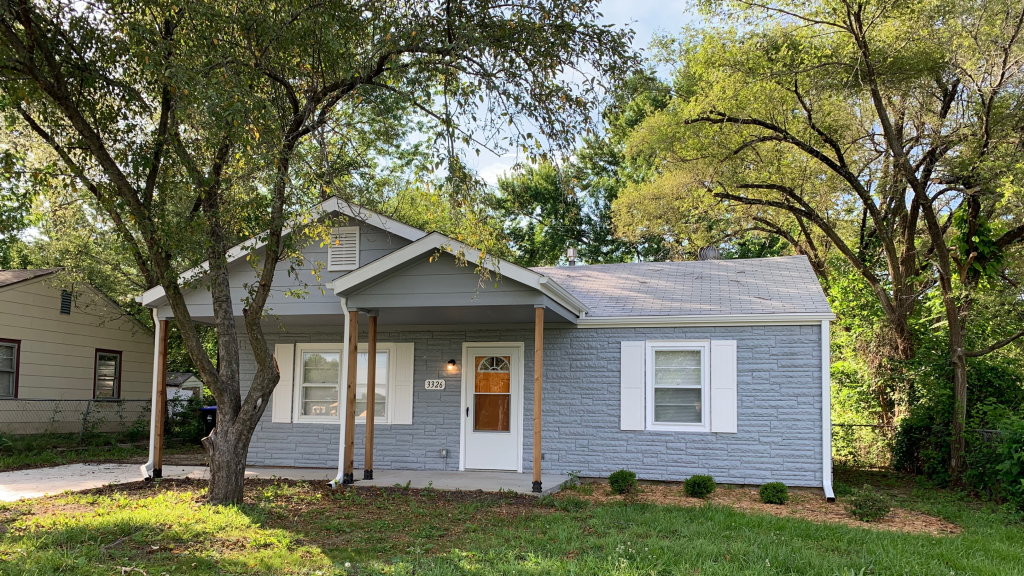
In almost every community conversation about housing, someone eventually says some version of: “We need affordable housing, but we don’t want those kinds of homes.”
I understand where that fear comes from. For decades, “manufactured housing” got lumped into images of flimsy trailers and disinvestment. But what’s happening today is different.
Modern manufactured housing and panelized construction are legitimate, high-quality building approaches that can help communities like ours build the homes we need, at a pace that matches real demand, while protecting neighborhood stability.
That is why in 2026 SENT will be using manufactured and panelized housing solutions in:
- Infill housing projects across our neighborhood footprint
- New Heights, our moderate-income single-family subdivision designed to strengthen stability and opportunity
This isn’t a pivot away from quality. It’s a commitment to it, built on research, local realities, and the long-term health of families.
The real issue isn’t “affordability.” It’s scarcity.
When people talk about the “affordable housing crisis,” it often sounds like a budgeting problem. Like if families just had a little more income, everything would work.
But the research is increasingly clear: the deeper driver is housing scarcity. When there are not enough homes available, prices rise, rents rise, competition intensifies, and families with the least flexibility get squeezed out first.
That pressure shows up in ways our community can feel:
- Families forced to move repeatedly
- Kids switching schools mid-year
- Workers commuting farther away from jobs
- Increased risk of homelessness
Housing scarcity is not solved with one program or one funding source. It is addressed when communities build more homes and do so in ways that protect stability.
Stability is an economic mobility strategy
Housing is not just shelter. It is the platform families stand on.
When housing is unstable, everything becomes harder: work schedules, childcare, medical appointments, and especially school consistency.
Research on rental assistance and neighborhood opportunity has found that when families gain stability,and especially when children experience that stability earlier in life,there are measurable long-term benefits in earnings, education, and reduced hardship.
That lines up with what we see every day. Stability is not the end of the story, but it is often the beginning of a better one.
Why manufactured and panelized housing are part of the solution
1) They expand supply faster
Manufactured homes are built to a federal HUD code in controlled factory settings. Panelized homes are built in sections (panels) off-site, then assembled on-site.
Both approaches reduce delays from weather, help address skilled labor shortages, and allow projects to move forward more predictably.
That matters when the need is not theoretical,it’s already here.
2) They can cost less without compromising dignity
Multiple studies show manufactured housing can cost significantly less per square foot than traditional site-built homes. That cost advantage is one of the few levers communities have to build homes that working families can actually access.
But cost is not our only metric.
At SENT, we care about dignity,homes that are safe, energy-conscious, and designed for long-term livability. Modern manufactured and panelized construction is not the only answer, but it is an important part of the solution available to communities today.
3) The biggest barriers are policy and perception, not quality
One of the most consistent themes in the research is that manufactured housing is not held back because it doesn’t work.
It is held back because:
- Local zoning often excludes it
- Financing and appraisal systems don’t always treat it fairly
- Public perception is shaped by outdated examples
This is why SENT doesn’t just build homes. We also work to build trust, communicate clearly, and keep our plans grounded in what actually helps neighborhoods flourish.
Manufactured and panelized housing also opens doors into the skilled workforce
Housing supply is only one side of the equation. How we build matters for who gets access to opportunity.
Manufactured and panelized construction lowers barriers to entry into the skilled trades in several important ways:
- More controlled work environments. Factory and panelized settings allow new workers to learn skills in safer, more predictable conditions than traditional job sites.
- Shorter learning curves. Repetitive, standardized processes make it easier for apprentices to build confidence and competency quickly.
- Stackable skills. Workers can begin with basic assembly, logistics, or finishing work and progress into higher-skilled trades like electrical, HVAC, framing, or quality control.
- Consistent hours. Factory-based work is less vulnerable to weather delays, creating steadier employment and income.
Research on workforce development consistently shows that stability in hours and wages is a critical factor in economic mobility, especially for workers supporting families or transitioning from underemployment.
For SENT, this matters because we do not separate housing from workforce development.
As we expand manufactured and panelized housing in 2026, we are intentionally aligning this work with:
- Apprenticeship pathways for local residents
- Earn-and-learn opportunities connected to housing production
- On-ramps into the skilled trades that do not require long gaps without income
Lowering the cost and complexity of housing production helps lower the cost and complexity of entering the workforce.
That is not accidental. It is part of how housing becomes an economic mobility strategy.
How SENT is applying this in 2026
Infill projects: adding homes without disrupting the fabric
Infill housing is one of the most practical ways to increase supply while strengthening existing neighborhoods.
Our 2026 infill work will use manufactured and panelized solutions to:
- Add homes on vacant or underutilized lots
- Reduce construction timelines
- Create pathways for families across a diverse economic spectrum
Done well, infill doesn’t “change the neighborhood.”
It helps a neighborhood hold together.
New Heights: a moderate-income subdivision that strengthens stability
New Heights is a key part of our long-term neighborhood health vision.
It is not designed as an “escape hatch” for a few families.
It is designed to build a stronger, more stable neighborhood ecosystem,where teachers, first responders, healthcare workers, and working families can live with dignity and opportunity.
Using manufactured and panelized approaches at New Heights helps us do three things at once:
- Build enough homes to matter
- Keep costs within reach for moderate-income households
- Maintain high standards of design and durability
Our guardrails haven’t changed. They’ve gotten clearer.
We have learned that when housing production increases, clarity matters.
From the beginning, SENT homes have included safeguards designed to protect long-term stability and prevent displacement pressures.
These guardrails include:
- First right of refusal / first right of purchase protections
- Owner-occupancy requirements
- Resale protections, including a 110% cap in the first five years
- A long-term affordability intent that prioritizes neighbors and stability over speculation
We are also examining ways to strengthen these guardrails as we scale.
Because we are trying to build the kind of neighborhood where a family can move:
from unsheltered to to stabilized rental to to dignified homeownership
…and do it without having to change the schools their kids attend.
That is not a slogan.
That is a stability strategy aligned with the City of Topeka’s Neighborhood Health Framework:
intensive care to stability to health
School stability at Ross Elementary, Eisenhower Middle School, and Highland Park High School is part of how we measure whether our work is actually helping families thrive.
What this means for our community
If you hear “manufactured housing” and your mind goes to the worst example you’ve ever seen, I get it.
But the question before us is not whether we can protect the past.
The question is whether we can build a future where working families have real options.
Modern manufactured and panelized construction is not the whole answer.
But they are one of the strongest tools available right now to:
- Increase housing supply
- Improve stability
- Support economic mobility
- Prevent displacement
- Keep families connected to schools and community
SENT is leaning into these tools because we believe every neighbor has infinite dignity, value, and worth.
And because transformation doesn’t happen by accident.
It happens when communities choose to build.
Sources
- Urban Institute, Housing Matters: “How Can Manufactured Housing Address the Affordable Housing Crisis?”
- Urban Institute (2024): “Place the Blame Where It Belongs”
- Urban Institute (2022): “The Role of Manufactured Housing in Increasing the Supply of Affordable Housing”
- Urban Institute (2025): “The ROAD to Housing Act”
- Harvard Joint Center for Housing Studies (2024): “Barriers to Manufactured Housing”
- U.S. Census Bureau: Manufactured Housing Survey (MHS) Data
- U.S. Census Bureau: American Community Survey (ACS)
- Pew Research Center (2025): “Manufactured Housing Survey Toplines and Methodology”
- Factory Expo Homes: “Discriminatory Zoning Laws Against Manufactured Housing” (industry source; included for accessible framing)
- U.S. Department of Labor: Apprenticeship and Earn-and-Learn Models