
I struggle with the tension.
In Topeka and in communities like ours across the country, we are caught between two competing realities. The first is the one splashed across headlines: homes are increasingly out of reach for working families. A recent Bankrate analysis put a number to what many already know in their bones: more than 75 percent of homes on today’s market are unaffordable for the typical household.
But there is a second, quieter crisis unfolding, one that people are only beginning to name. As more voices speak about affordability, we still avoid the deeper issue: affordability does not speak about wealth generation, nor does it confront the absence of generational wealth. It is the crisis of wealth, or more accurately, the crisis of having no viable pathway to build it.
Even when families in Topeka manage to secure a home, even when they do everything “right,” they are entering a system where wealth creation simply does not function the same for everyone. The median net worth in Topeka is $102,975, far below the Kansas median of $154,116 and the national median of $195,373. And for many families, including many Black families in Shawnee County, where the median income is $43,160 and homeownership sits at 36.8 percent compared to the city’s 56 percent, the starting point is different in ways shaped by long-standing economic and structural factors, not by personal failings. The result is that the path to building wealth is steeper for some households than for others.
These realities do not simply coexist. They collide. And families are caught in the wreckage.
The Illusion of Affordability
When we celebrate “affordable housing,” we often mean that a family can attain a mortgage without stretching itself beyond the 30 percent income rule. But affordability without mobility is an illusion. A low-cost home in a low-wealth community is not the same thing as a wealth-building home.
Here is the truth we rarely say aloud:
A family can buy an affordable home and still fall further behind.
Because the value of the home is tied to the economic ecosystem around it.
Because wages in Topeka lag behind national wages across prime earning years.
Because historic disinvestment has hollowed out neighborhoods where appreciation is slow.
Because the home, for many, becomes the only asset,but an asset that grows too slowly to create true security.
And so we live with the tension: we must build affordable homes… but we must also be honest that a home alone cannot repair a broken system.
The Weight Families Carry Before They Ever Build Wealth
The Urban Institute’s Financial Health & Wealth Dashboard paints a sobering picture of what families face long before they ever think about homeownership:
- 27 percent of Topekans carry delinquent debt.
- 76 percent of low-income households are housing-cost burdened.
- 46 percent face high utility bills, a hidden tax on the poor.
- Even student loan delinquency, at 16 percent of all Kansans and 24 percent of Kansans of color, signals the fragility of many young wage earners.
These aren’t poor decisions. They are the symptoms of a system designed without the majority of families in mind.
Layer onto this the findings from Black Kansans in Review: Health, which highlight patterns such as lower incomes, higher unemployment, lower educational attainment, and higher uninsured rates. These differences did not appear overnight, and they are not the result of any one group’s choices. They reflect long-standing conditions that have shaped opportunities for many families in our community over time. When we acknowledge this, it is not to cast blame or to divide, but to understand the fuller picture of why certain barriers persist, and why thoughtful, community-centered solutions are so important.
And Topeka bears the imprint of that construction.
If We Want Different Outcomes, We Need a Different Model
At SENT Inc. and Fellowship Hi-Crest, we have learned, sometimes through data, sometimes through heartbreak, that no single intervention is enough. Not housing alone. Not mental health alone. Not education, food access, workforce, or transportation alone.
Families do not live in silos. Our solutions cannot either.
So instead, SENT has built a neighborhood-based, multi-sector model designed to repair, not just relieve, generational inequities:
Housing that stabilizes and preserves dignity
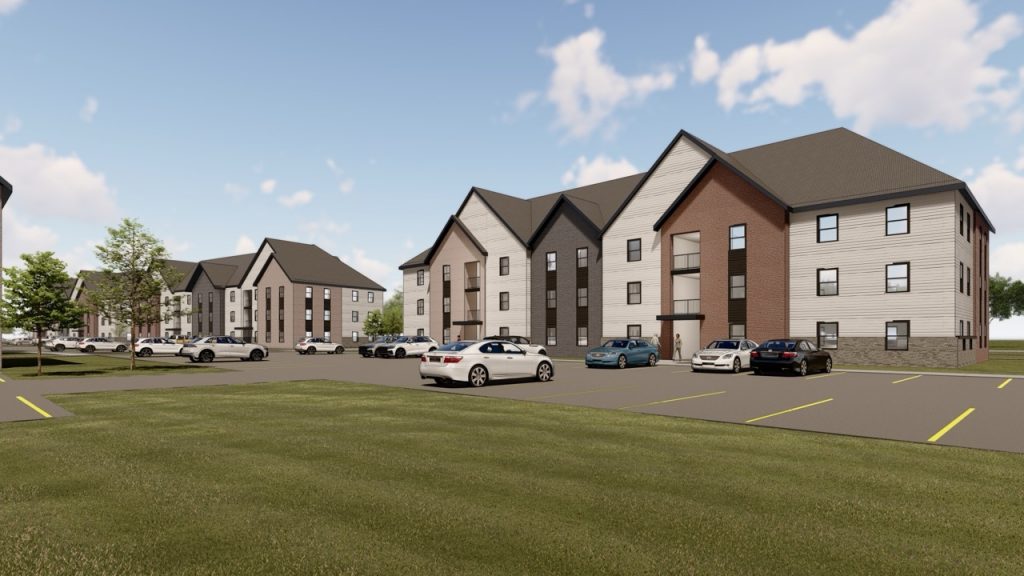
Workforce homes. Multifamily development. Net Zero builds that lower energy burdens. Housing-first models that pair shelter with long-term holistic care.
Food access that reduces cost burdens and improves health
A client-choice pantry. Hopefully, in the near future, Food-as-Medicine boxes. Local farm partnerships. SNAP access for six Kansas regions.
School-based mental health and youth development that changes outcomes before crisis hits
Four campuses, Ross, Eisenhower, Anvondale Academy, and Highland Park, now host members of our Campus Connections team, which includes mental health staff, addiction prevention, case management, physical health & wellbeing, and mentorship.
Workforce pathways that create mobility, not just employment
Community Health Worker (CHW) training. Reentry pipelines. Apprenticeships. Wrap-around support for workers trapped in transit deserts.
Health access that removes barriers the system has put in place
Our wellness clinic brings preventive and behavioral health care directly into the neighborhood.
This is what it looks like to build a community where a family can do more than survive. This is what it looks like to build a community where a home becomes a platform, not a burden.
The Hardest Truth: The Struggle Is Structural
There is a familiar narrative in American culture that suggests families rise or fall solely by the quality of their choices. But the more we listen to our neighbors, look at the data, and reflect on lived experience, the more we see a more complex story.
Families are not struggling because they lack effort or desire. Many are working incredibly hard, yet the cost of essential goods has risen faster than wages, and the systems that shape health, stability, and mobility have not served every neighborhood equally well. These realities did not emerge from any one decision or any one generation, and they are certainly not the fault of the people doing their best within them.
This is not a story of personal failure. It is a story of challenges that have built up over time, often unintentionally, and that now require our shared attention.
And because these challenges are shared, the work of addressing them can also be shared. This can be a story of structural repair, one that brings partners together rather than pointing fingers.
The Case for Hope, and for Investment
We are building affordable homes. And yes, those homes enter an ecosystem where equity grows slowly.
We are supporting youth in schools where many face trauma before breakfast.
We are strengthening families who, through no fault of their own, cannot weather a $2,000 emergency.
We are anchoring health access in a neighborhood where many still avoid care because of cost.
But here is the part that matters:
When you stabilize housing, reduce food costs, improve mental health access, connect youth to positive adult figures, support returning citizens with work, and bring health care to the doorstep, something powerful happens.
A home becomes more than an address.
A family becomes more than its struggles.
A neighborhood becomes more than its headlines.
We begin to see not crisis, but capacity.
Not deficits, but dignity.
Not charity, but transformation.
This is the work of SENT. This is the work of Fellowship Hi-Crest. This is the work Topeka deserves.
And this is the moment for Kansas leaders to scale what works.
A Final Word on the Tension
Yes, the tension remains: affordability versus wealth-building, low-cost homes versus slow appreciation, immediate need versus long-term mobility.
But tension is not a problem to be avoided. Tension is a signal, a sign that something must stretch, must change, must grow.
We choose to live in the tension because that is where transformation happens.
And Southeast Topeka is transforming.
One home. One family. One school. One block at a time.
Sources
- Bankrate. “More than 75 percent of homes are unaffordable for the typical household.” https://www.bankrate.com
- Urban Institute. Financial Health & Wealth Dashboard. https://apps.urban.org/features/financial-health-wealth-dashboard
- Urban Institute. American Affordability Tracker. https://www.urban.org/data-tools/american-affordability-tracker
- Urban Institute. Policy Solutions for an Affordable Future. https://www.urban.org/apps/policy-solutions-affordable-future
- REACH Healthcare Foundation. Black Kansans in Review: Health. https://reachhealth.org
- Open Wealth Consortium. Topeka MSA Wealth and Income Profiles. https://www.openwealthdata.org
- U.S. Census Bureau, American Community Survey (ACS). https://www.census.gov
- Federal Reserve, Survey of Consumer Finances. https://www.federalreserve.gov/econres/scfindex.htm