
At the beginning of 2025, I sat down with the newly released America’s Health Rankings and felt a genuine sense of encouragement. Kansas had moved from #29 to #28 in the country. It was a small shift, but it mattered. Movement means momentum. And momentum invites responsibility.
I spent hours poring over the data, not just looking at statewide trends, but asking a more grounded question: What would it look like for Shawnee County, and more specifically for the Hi-Crest neighborhood, to do its part in helping Kansas continue its journey toward becoming the healthiest state in the nation?
As we broke the data down from the state level to the county level, and then to the neighborhood scale, patterns began to emerge. Some of the gaps aligned closely with the work SENT was already doing—housing stability, food security, access to care, behavioral health, and transportation. But one gap stood out clearly as an area we were not meaningfully addressing: physical inactivity.
The data was clear. If Hi-Crest were going to carry its share of the load in helping Kansas move toward #1, we would need to see more residents become physically active. So I did what leaders often do when confronted with a gap: I started designing a program.
I imagined a two-step dance class. It felt culturally relevant, joyful, and accessible. I also envisioned a neighborhood walking program—simple, low-cost, and effective. We had the funding to do both. I was confident people would want to participate.
Thankfully, my team slowed me down.
Before launching anything, they encouraged us to ask the community what they actually wanted. So we did. We polled neighbors. We had conversations. We listened. What we learned was humbling. Interest in the dance class was minimal. While there was slightly more interest in a walking program, we struggled to find a facilitator who could sustain it.
As the year went on, another realization surfaced—one that was harder to ignore. As I continued reflecting on Leading Health by Ed O’Malley, I was reminded that alignment and execution rarely begin with new programs. They begin with leaders and organizations being honest about what they are actually modeling day to day. As I continued reading Leading Health and reflecting on our own practices, it became clear that, broadly speaking, the SENT and Fellowship Hi-Crest teams were not consistently modeling physical activity themselves. While a few staff members were highly active, the majority of us were not.
And that mattered.
One of our team mottos is that language creates culture, and culture trumps strategy every day of the week. Culture is what we teach, what we tolerate, what we celebrate, and—perhaps most importantly—what we model.
We wanted the neighborhood to become more physically active, but we were not consistently demonstrating that behavior ourselves.
So, going into 2026, I made a decision. Instead of starting with a new community program, we would start with ourselves.
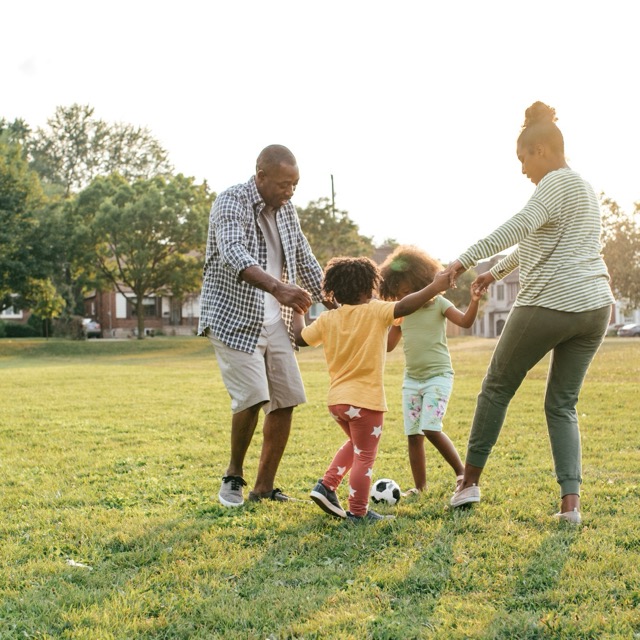
We launched a team-wide health challenge focused on regular physical activity. Not as a performative exercise, but as a commitment to self-leadership. When I revisited the 2025 health rankings data with this lens, something surprising emerged. If our staff—many of whom live in or are deeply connected to the Hi-Crest neighborhood—simply became more physically active, we would actually meet Hi-Crest’s proportional contribution toward closing the physical inactivity gap at the state level.
That realization reframed everything for me.
Sometimes the journey toward becoming the healthiest state doesn’t begin with a new initiative, a grant, or a program. Sometimes it begins with who we choose to become.
Self-leadership is always the first stage of leadership. Before we can lead a neighborhood, we have to lead ourselves—with consistency, humility, and commitment to a shared goal.
As SENT continues to align its work with the data, with our Theory of Change, and with the real lives of our neighbors, this lesson will stay with us. Modeling the behaviors we hope to see may be one of the most powerful tools we have.
Going into 2026, Kansas is now ranked 27th. That movement matters. But if we want to accelerate the pace at which Kansas moves toward #1, we have to do more than wait on long timelines. We need more communities and more individuals to model the behaviors we hope to see, because while we know this work will not happen overnight, we also do not believe the journey to #1 needs to be a 20‑year expedition.
We believe Kansas can move more than one spot per year.
That conviction shapes how we respond to the remaining gaps we still see when we compare Kansas to New Hampshire, the current top‑ranked state. It pushes us to keep investing in stable and affordable housing, to expand access to primary and mental health care through the Southside Wellness Clinic, to grow our Food Is Medicine work, to address transportation barriers, and to continue strengthening prevention and recovery supports. These efforts are not abstract. They are directly tied to the areas where the data shows Kansas still has ground to make up.
Ultimately, this season has reinforced something simple but important for us. Progress at the state level is built through consistency at the personal and neighborhood level. When people lead themselves well, communities change. And when enough communities carry their part of the load, states move.
Neighborhood by neighborhood, person by person, habit by habit, that is how Kansas accelerates its journey toward #1 in health.