
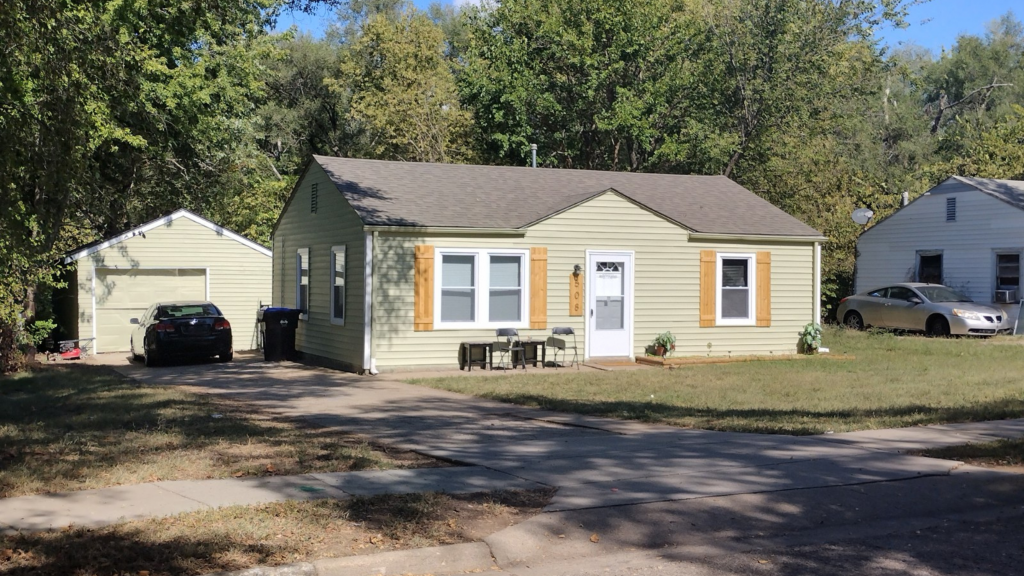
When it comes to closing the affordable housing gap in neighborhoods like Hi-Crest, in counties like Shawnee County, in states like Kansas, and across our country, one word matters a lot: capacity.
Capacity affects almost every part of the housing system. The number of homes available affects what homes cost. The capacity of lenders affects what kinds of loans families can get and what interest rates they pay. The financial capacity of families affects whether they can cover down payments, closing costs, monthly payments, insurance, and the rising cost of maintenance.
The same is true for community development organizations like SENT. Even when new opportunities are created, they only help if organizations have the capacity to move on them. That means having strong partners, a clear pipeline of projects, access to land, early planning work underway, and enough runway to respond before the opportunity passes.
That is why two major federal housing bills are worth paying attention to right now: H.R. 6644, the Housing for the 21st Century Act, and the Senate’s 21st Century ROAD to Housing Act of 2026.
To be clear, these bills do not fully solve the housing crisis. No single bill can. Our lawmakers are imperfect, and any bill they produce will be imperfect too. But an imperfect bill can still create real progress. And when we know change may be coming before it fully arrives, we have a chance to prepare.
That is what makes this moment so important. Because these bills are already taking shape, organizations like SENT, along with local municipalities, lenders, builders, and development partners, have a chance to get ready now. That preparation could help us move faster if these bills become law. It could help us not only in Hi-Crest, but across Shawnee County, alongside partners in other counties in Kansas, and in ways that could be repeated in communities across the state.
It also gives us a chance to be a better partner. When we prepare early, we are better able to work with cities, counties, and development partners in ways that help affordable housing move forward while also making sure the work remains realistic and sustainable for everyone involved.
A more supportive housing environment may be taking shape
If a final federal package passes in roughly this form, it could create a more helpful environment for community-based housing work.
That could mean fewer barriers that slow projects down. It could mean more flexible housing tools for local governments and development partners. It could mean stronger support for expanding supply and more openness to lower-cost building approaches, including modular and other factory-built housing methods.
In plain terms, these bills could make it easier for communities to move good housing projects forward.
For SENT and organizations like us, that could support infill housing, scattered-site development, entry-level homeownership, rehabilitation work, small multifamily projects, and other neighborhood-based efforts that depend on speed, flexibility, and strong local partnerships.
This is a moment to prepare, not just watch
One of the clearest lessons in housing work is that communities benefit most when they prepare before the opportunity arrives.
That means now is the time to identify projects that are closest to ready. It means now is the time to strengthen partnerships among local governments, developers, builders, lenders, and community organizations. It also means now is the time to think seriously about how lower-cost and innovative housing approaches can fit into a local housing strategy.
For developers and builders, especially those working in affordable housing or modular construction, readiness matters. The partners who can clearly show pricing, timelines, product options, installation expectations, and neighborhood fit may be in the strongest position if the policy environment becomes more favorable.
What local municipalities can do right now
Local municipalities have an especially important role to play.
One of the most practical things a city can do now is get strategic infill lots and green pieces of land into the hands of trusted community housing development partners. When mission-driven organizations like SENT already have site control, the pre-development work needed to become shovel-ready can begin earlier. That includes planning, site review, design work, early pricing, infrastructure coordination, and financing conversations.
That kind of early preparation matters. If cities wait until every rule is finalized or every funding source opens, valuable time can be lost. But when land is already in the hands of trusted partners, communities are in a much stronger position to move quickly.
Municipalities should also ask an important question now: What local legislation, zoning practices, land disposition policies, and development processes need to be reviewed so they are aligned with the federal housing direction now taking shape? If federal policy becomes more supportive of faster approvals, increased supply, and more flexible housing tools, outdated local rules could still keep communities from moving at the speed this moment may require.
In other words, local readiness is not just about funding. It is also about land, process, and policy alignment.
A shared opportunity for housing and community development partners
For affordable housing developers, community development organizations, local governments, builders, lenders, and neighborhood partners, this moment offers a shared opportunity.
The federal direction appears to be moving toward fewer barriers, more flexibility, and stronger support for expanding housing supply. If that continues, the communities that are best prepared will likely be the ones that already have strong partnerships, clear projects, local alignment, and strategic land in place.
That is why this is a season for preparation. It is a time to review local barriers, identify buildable sites, strengthen relationships, and build a pipeline of projects that can move when the opportunity is right.
The takeaway
These bills alone will not solve the housing crisis. But they do send an important signal. They suggest that communities working to expand affordable housing, strengthen neighborhoods, and create more pathways to homeownership may soon have a more supportive federal environment in which to do that work.
For organizations like SENT, and for the many partners who care about the future of our neighborhoods, the message is simple: prepare now. The communities that do the hard work of readiness today may be the ones best positioned to build tomorrow.