
For many families, the decision to see a doctor is no longer based solely on health—it is based on what they can afford. Rising medical costs, higher insurance premiums, prescription expenses, transportation challenges, and unpaid time away from work are forcing people to delay or skip needed care altogether. When preventive visits, routine screenings, and treatment for chronic conditions become financially out of reach, small health concerns can quickly become serious problems. The result is more pain, more stress, worsening health outcomes, and a lower quality of life for individuals and families already working hard to make ends meet. Across communities like ours, the growing cost of health care is creating a troubling reality: too many people are being forced to choose between their financial stability and their health.
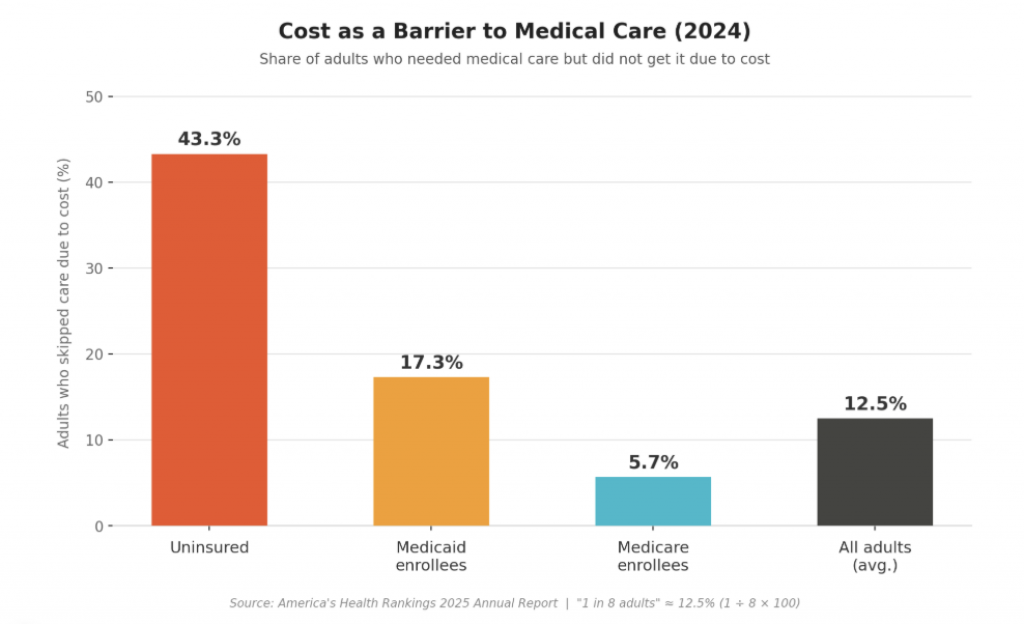
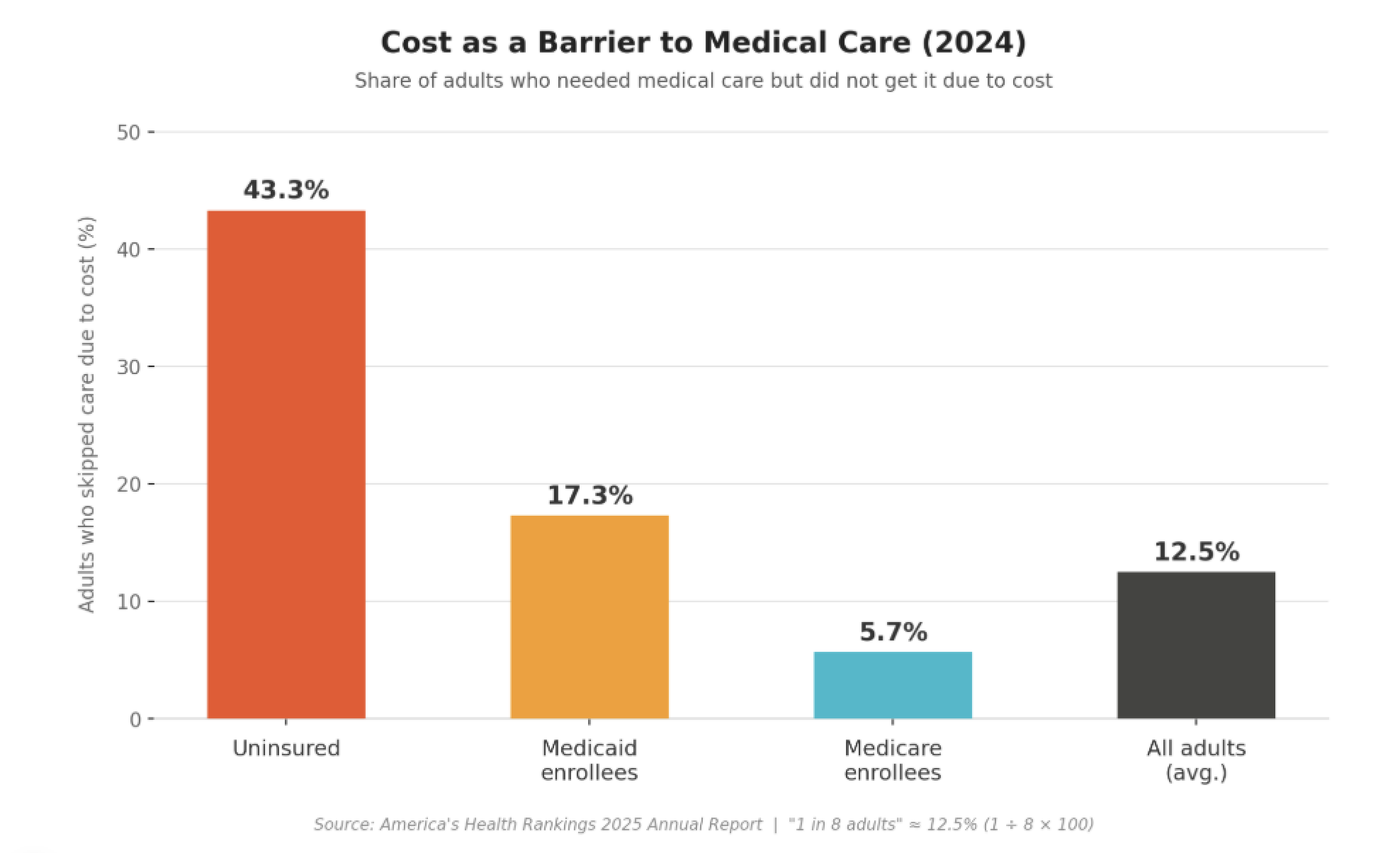
A recent report from SHADAC found that more adults are putting off doctor visits because they cannot afford them. In 2024, about 1 in 8 adults said they needed medical care but did not get it because of cost. The problem was especially severe among uninsured adults, 43.3% of whom reported foregoing needed care because of cost, compared with 17.3% of Medicaid enrollees and 5.7% of Medicare enrollees. The report also found that adults with chronic health conditions were more likely to delay care because of cost, which can make ongoing health problems harder to manage.
 This information matters in communities like Topeka, where many families already face challenges getting regular health care.
The cost of health insurance is also a concern for many families. According to the State Marketplace Network’s March 2026 Enrollment Snapshot, enrollment in Affordable Care Act (ACA) Marketplace plans remains strong. Even so, many people are worried about what health insurance may cost in the future. For families already trying to cover rent or mortgage payments, groceries, transportation, and childcare, higher insurance costs can make it harder to keep coverage.
A recent report from Georgetown University’s Center for Children and Families reviewed estimates from the Congressional Budget Office (CBO) and found that upcoming policy changes could affect health coverage for millions of people. The estimates suggest that about 10 million more people could be without health insurance by 2034 than previously expected. According to Georgetown CCF, many of those changes are tied to Medicaid and CHIP programs. The report points to things like new paperwork requirements, more frequent eligibility reviews, and changes to Marketplace coverage that could make it harder for some people to stay enrolled. While people have different opinions about these policy changes, the report highlights that many families could face new challenges in keeping their health coverage.
The link between health coverage and access to care is clear. SHADAC’s findings show that adults without insurance are much more likely to skip needed care because of cost. When people lose coverage or have trouble keeping it, it can become harder to get regular checkups and preventive care. This can create more challenges for families and communities.
That is why neighborhood-based care matters.
At SENT, our Southside Wellness Clinic, benefits navigation, transportation support, Food as Medicine program, mental health and recovery services, and whole-family approach all work together. As health coverage rules continue to change, helping people understand their options and stay connected to care is more important than ever.
One way we do that is through our insurance navigation services. Our certified navigator helps individuals and families understand ACA Marketplace plans, compare coverage options, find out if they qualify for financial help, complete enrollment forms, and keep their coverage when life changes happen. Having a trusted local guide can help families understand their choices and stay connected to health insurance when possible.
We are not just responding to crises. We are working to prevent them before they happen.
When access to care becomes harder—because of cost, coverage changes, transportation problems, or other barriers—prevention becomes harder too. Our goal is to bring trusted care closer and help families stay connected to the services they need to stay healthy and thrive.
Sources
- State Health Access Data Assistance Center (SHADAC). More Adults Forego Needed Health Care Due to Cost in 2024. University of Minnesota. Available at: https://www.shadac.org/news/unaffordable-health-care-costs-forgone-care-2024-differences-state-coverage-chronic-disease
- State Marketplace Network. State Marketplace Network Enrollment Snapshot: March 2026. Available at: https://statemarketplacenetwork.org/state-marketplace-network-enrollment-snapshot-march-2026/
- Georgetown University Center for Children and Families (CCF). New CBO Health Coverage Estimates of Budget Reconciliation Law. Available at: https://ccf.georgetown.edu/2025/08/14/new-cbo-health-coverage-estimates-of-budget-reconciliation-law/