
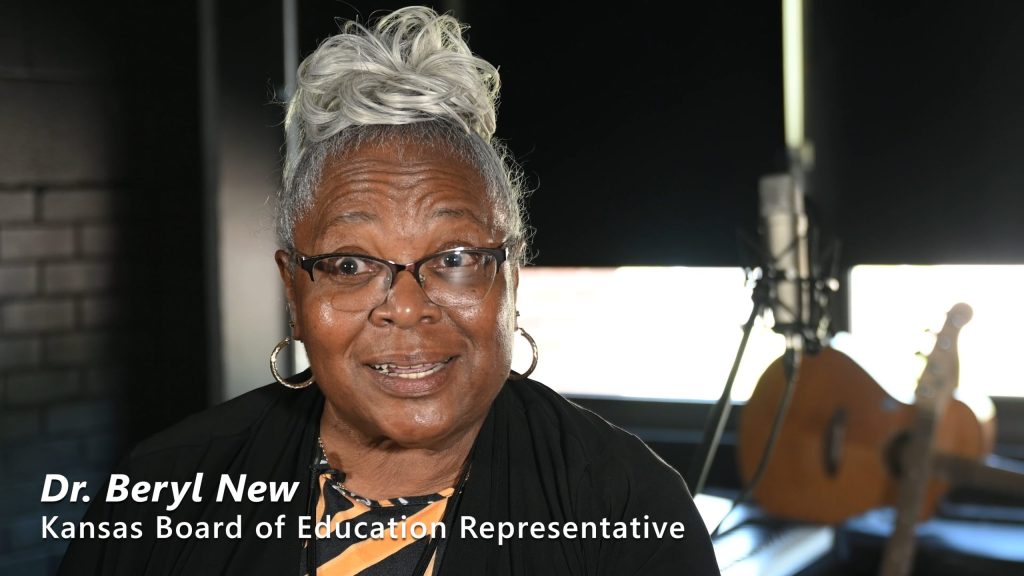
A new school year brings fresh excitement, but that first-day energy doesn’t last long. As Dr. Beryl New has seen in her decades in Topeka public education, the excitement usually lasts about three days. Then the reality of a new routine sets in. For many students, and especially those in recovery, that adjustment can be hard. In this video, Dr. New shares what parents and educators should watch for and how caring adults can help students start the year strong.
Signs a student may be struggling
Dr. New encourages parents and educators to pay attention to these warning signs of back-to-school stress:
- School avoidance. The student doesn’t want to go to school in the morning.
- Frequent physical complaints. The student has stomachaches or headaches on a consistent basis.
- Anxiety. The student talks a lot about feeling anxious or seems to dread discomfort.
- Social exclusion. The student reports that other students are leaving them out, talking about them, or teasing them.
- Anger. The student talks about feeling angry or shows it.
These signs may point to something happening at school, or to something the student is working through internally. Her advice is simple: sometimes the best first step is just to have a conversation.
Challenges for students in recovery
- Returning to school can be especially hard for students in recovery. Dr. New names three challenges:
- Friend groups. Students may be drawn back toward certain friend groups, and the reasons they formed those friendships in the first place matter.
- Motivation. Students need to keep their motivation up so they don’t slip into a low point.
- Staying sober. Students need their own drive to keep succeeding and to maintain their sobriety.
Strategies parents and educators can use
- Identify a safe person at school.
Every student in recovery should have a trusted adult they can go to and say, “I’m struggling today.” That person can reaffirm the good choices the student has made and remind them they can keep making them. - Plan a daily conversation at home.
Dr. New recommends that parents set aside time each day to check in. The conversation should affirm the student’s success and also give them a judgment-free space to be honest about hard days, such as pressure they’re feeling in a certain class. A parent, guardian, or trusted adult can then help them work through it. - Keep consistency and structure.
Young people often want to seem like near-adults, but they are still kids, and they know it. Clear routines and boundaries help them feel safe, and that matters for every child, not only students in recovery. - Give students a rule they can point to.
Boundaries set by adults can be a powerful tool for students under peer pressure. A student who can say “My mom said I can’t leave campus” or “Ninth graders don’t have open lunch” can turn down risky situations without losing face with friends. When the student can put the blame on an adult, it becomes easier to make the right choice in the moment. - Remember what it was like to be a teenager.
Dr. New says adults can easily forget what it felt like to be young. Students working to stay sober benefit most from adults who remember those years and support them the way they would have wanted to be supported. That kind of understanding helps young people grow into the adults we hope they will become.
How SENT supports Topeka youth
Dr. New highlights the programs SENT offers to young people in the Hi-Crest community and across Topeka:
- Counseling and motivation. These programs help students navigate a difficult stage of life and recognize their self-worth, their value, and their potential.
- Campus Connections. This program is new this year. It brings students together for academic support and positive social connections.
- Bridge Builders. This program teaches financial literacy, especially to young people who are already working in the community, so they can manage their money and become productive contributors to the city.
- Recovery support. These programs serve youth who are in recovery or who need recovery support.
A final thought for students and families
Dr. New closes with a message of encouragement for the new school year:
“Every day is a new opportunity to be the better you than you were yesterday. And that’s the reason none of us can give up.”