
Why Neighbor Advocacy Is the Heart of SENT’s Wraparound Model
Asking for help is hard.
Most people wait until things are falling apart before they reach out. And when they finally do, here is what they often find: a maze. One office for food. Another for utility help. A different number for counseling. A waiting list for housing. A website for benefits that asks for documents they don’t have.
Every stop means telling your story again, to a stranger, from the beginning.
Research prepared for the U.S. Administration for Children and Families confirms what our neighbors already know. When programs operate in silos, with separate rules and separate applications, families carry the burden of navigating all of it. And when programs coordinate, families do better.¹
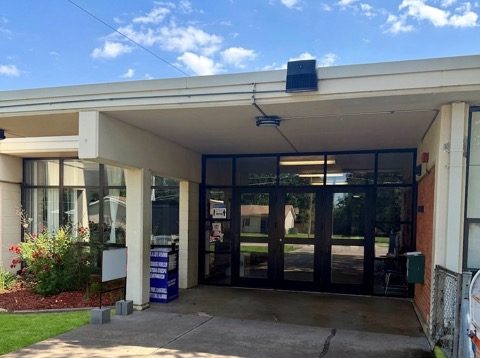
At SENT Inc., we built something different: the SENT Family Resource Center at the Avondale East Care Center. It is the only Family Resource Center in our community, and it exists so families can find real help in one place, through one relationship.
The Southside Filling Station is where many neighbors first connect with us. Neighbor Advocacy is what turns that first visit into a path forward. Together, they make the Family Resource Center more than a building.
 What Is a Family Resource Center?
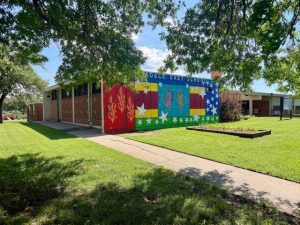
A family resource center is a trusted, neighborhood-based hub where families can access many kinds of support in one place, before small problems become big ones.
The model is backed by strong research. Casey Family Programs, the nation’s largest operating foundation focused on child and family well-being, names strong partnerships with community-based providers as a defining element of effective family resource centers.² Communities with these centers have seen significantly lower rates of child maltreatment investigations, and in Alabama, every $1 invested in family resource centers returned $4.70 in immediate and long-term financial benefits.²
Why? Because prevention costs less than crisis. When families get support early, in one trusted place, fewer emergencies happen later.
What Is Neighbor Advocacy?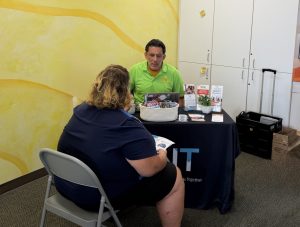
If the Family Resource Center is the hub, Neighbor Advocates are its heart.
Neighbor Advocacy is a coordinated approach to personalized help. In plain words: it is a real person who sits down with you, listens to your whole situation, and then walks with you to every resource you need, inside SENT and beyond it.
Not a phone tree. Not a pamphlet. A person.
Think of all the services at the Family Resource Center as spokes on a wheel. Mental health therapy. Substance use treatment. Housing and home repair. Food access. Transportation. Workforce training and GED classes. Campus Connections for students. Chiropractic care, massage therapy, nutrition counseling, and affordable healthcare options through partners in our building. Utility assistance, tax prep, mailboxes, and free City IDs.
Neighbor Advocates hold the wheel together, so no family has to figure out the spokes alone.
How It Works
Getting started is simple. You can visit the SENT Family Resource Center at the Avondale East Care Center, call 785-783-2535, or email info@senttopeka.com. There is no wrong way to begin. Many neighbors start with a bag of groceries at the Southside Filling Station and a conversation that begins with “how are things going, really?”
From there, an advocate sits down with you for a Strengths-Based Assessment, about an hour of real conversation. Notice the name. It does not start with what is wrong with you. It starts with what is strong in you: your work, your skills, your goals, the things you are already doing right. Then, together, you look at the challenges across every area of life and build a plan.
After that, the advocate puts the plan in motion, using tools like the IRIS referral platform to connect you to services inside SENT and with partners across the community, and the mRelief platform to screen for SNAP in minutes. You can even text “Food” to 74544 to check your SNAP eligibility right now.
One relationship. One plan. Many connections.
What That Looks Like in Real Life
These are real stories from our Neighbor Advocacy team, shared with details protected.
A single mother of five reached out in crisis this fall. Her phone had been stolen, along with her banking app and her entire paycheck. Suddenly she was $838 behind on rent and facing possible displacement, while working full time and maintaining her sobriety.
Her advocate helped secure emergency rent relief through partner networks, applied for utility assistance, and connected her to the Southside Filling Station, saving her household roughly $700 a month on groceries. Then they went further. They completed her application for primary medical care, referred her to SENT’s mental health team for counseling, and connected her with our Workforce Development team, where she is taking steps to enroll in GED classes and map a pathway back into caregiving, the field she loves.
One stolen phone could have unraveled everything. Instead, one visit to the Family Resource Center opened six kinds of support.
A single mother of four, a para-educator who shows up for other people’s children every school day, came to the Family Resource Center in tears. Her summer contract had been unexpectedly cancelled, and because she works full time during the school year, she did not qualify for SNAP or TANF. Her family’s water had been disconnected, in a home with two children with special needs and a toddler.
Her advocate looked at the full picture and saw a family that did not need rescue. They needed a bridge. Her son had just finished his CNA certification and was interviewing for jobs. Her contract restarted in August. So the team built a creative budget using the Southside Filling Station to free up grocery money, set up structured payment plans with her utility providers, and connected her with community relief to restore her water.
She did not need someone to solve everything for her. She needed a team willing to sit down, think creatively, and walk alongside her until she was back on her feet.
A family of four lost their footing after a one-month layoff. Savings gone. A $662 utility bill looming. They had sold their washer and dryer just to cover essentials. Dad found new full-time work quickly, but the hole was deeper than one paycheck could fill.
Their advocate helped cover $500 of the utility bill to prevent disconnection, secured a $750 emergency grant to replace the washer and dryer, and connected the family to the food pantry, cutting grocery costs by an estimated $700 a month. What started as a crisis became a turning point. Today that family is not just recovering. They are saving.
Three different families. Three different starting points. The same Family Resource Center holding every plan together.
The Numbers Behind the Stories
In 2025, SENT’s Neighbor Advocates coordinated 1,047 referrals. About 702 connected neighbors to services inside SENT, and 345, roughly 1 in 3, connected neighbors to trusted partners outside SENT.³ Because the goal was never to keep people in our programs. The goal is to get people to the right help, wherever it lives.
And neighbors tell us the model is working. In a 2026 survey of 268 SENT participants:⁴
- 95 percent said they feel more confident finding help and services when they need them
- 93 percent said they are better able to meet basic needs like food, bills, and transportation
- 92 percent said they feel more hopeful about their future
- 89 percent said they are making progress toward their personal goals
One participant put the whole model in five words: “It’s all in one building.”
Another named the thing that matters most: “Knowing that if I need assistance I’ll be given help or an answer, not just dismissed.”
That is the Family Resource Center doing its job.
Everything Under One Roof
When you sit down with a Neighbor Advocate at the SENT Family Resource Center, here is the network behind them:
- Food: the Southside Filling Station, a low-barrier, client-choice pantry, plus SNAP screening and application help
- Mental health: individual therapy for children, teens, adults, and seniors, in person or virtual, plus group programs like Making Sense of Your Worth and parenting support
- Substance use treatment: screening, outpatient and intensive outpatient care, group therapy for teens and adults, and free naloxone and fentanyl test strips
- Health and wellness: affordable chiropractic care, therapeutic massage, trauma-informed pediatric occupational therapy, nutrition counseling, and low-cost healthcare and prescription options through partners in our building
- Housing: rental connections, home repair programs like Curb Appeal, seasonal Beat the Heat air conditioning units, and pathways toward homeownership
- Financial stability: utility and water assistance through the Community Resource Council, free tax preparation with AARP in season, and emergency relief through partner networks
- Work and education: GED classes, workforce certifications, job coaching, resume help, mock interviews, and career pathways for youth, adults, seniors, and neighbors reentering from incarceration
- Students and families: Campus Connections in neighborhood schools, Level Up coaching for young adults, Creative Expressions, and the Bridge Builders Investment Club
- The practical things that unlock everything else: free mailboxes for neighbors without a permanent address, free City of Topeka IDs, and no-cost transportation to SENT appointments within a 10-mile radius
No one needs all of it. Everyone needs some of it, at some point. The Family Resource Center is here either way.
You Don’t Have to Have It Figured Out
Maybe you read one of those stories and saw your own. Maybe things are not in crisis yet, just heavy. You do not need to wait for the bottom to fall out, and you do not need to know what kind of help you need before you ask.
That is our advocates’ job. Yours is just to come see us.
Call 785-783-2535. Email info@senttopeka.com. Or visit the SENT Family Resource Center at the Avondale East Care Center, 455 SE Golf Park Blvd., Topeka, KS 66605. Office hours are Monday through Thursday, 8:00 AM to 5:00 PM, and Friday, 8:00 AM to noon. To check SNAP eligibility by text, send “Food” to 74544.
One place. One relationship. A whole community of support.
Learn more about the SENT Family Resource Center at senttopeka.com/family-resource-center and about Neighbor Advocacy at senttopeka.com/neighbor-advocacy.
Works Cited
Casey Family Programs. “What Do We Know About Family Resource Centers?” Issue brief. Seattle, WA: Casey Family Programs, July 2024. https://www.casey.org/family-resource-centers/.
SENT Inc. 2025 Annual Report. Topeka, KS: SENT Inc., 2025.
SENT Inc. Neighbor Advocacy Impact Stories. Topeka, KS: SENT Inc., 2026. (Internal documents; details anonymized.)
SENT Inc. Services Impact Survey, Quarter 3 YTD Report, April 1–September 30, 2026. Topeka, KS: SENT Inc., 2026. (Internal document.)
Stepleton, Kate, Semhar Gebrekristos, Lisa Rau, Carly Morrison, Rachel Richman, and Gretchen Kirby. Supporting Coordinated Benefits Delivery to Foster Whole-Family Approaches: Developing and Piloting a Toolkit for State and Local Agencies. Report submitted to the Administration for Children and Families, U.S. Department of Health and Human Services. Alexandria, VA: MEF Associates, October 2025.
Notes:
- Stepleton et al., Supporting Coordinated Benefits Delivery.
- Casey Family Programs, “What Do We Know About Family Resource Centers?”
- SENT Inc., 2025 Annual Report.
- SENT Inc., Services Impact Survey, Q3 2026.