
SENT is a holistic community development nonprofit based in the southeast Topeka neighborhood of Hi-Crest. We like to say we are person-centered and data-driven. We have dynamic programming on a short feedback loop. That means we stay close enough to people to know what they are facing, and we use data to see if our work is actually changing outcomes.
For SENT, housing is not a standalone program. Housing is part of everything.
It connects to health. It connects to food access. It connects to schools. It connects to jobs. It connects to safety. It connects to whether a family can stay rooted long enough to build wealth, trust, and stability.
Hi-Crest was originally built around an Air Force base. The west side of the neighborhood was built mostly for enlisted men. The east side was built mostly for officers. Then the base downsized. Then a tornado came through Topeka. Almost overnight, about 85% of our neighborhood became renters.
In 2019, SENT built the first new house in our community in more than 60 years. We built it across the street from a place that had been used as an illegal dumping ground for more than 20 years.
That matters because neighborhoods do not decline by accident. They decline through decisions, disruption, and lack of investment. So if we want community uplift, we have to build systems that help people stay rooted instead of pushing them out.
Let me give you the example we often use at SENT.
Say we bring a young man from our neighborhood into our workforce program. When we first started this work, the average Black child in our neighborhood was projected to have a household income of around $19,000 a year by age 35. The average Hispanic child was projected to have a household income of around $22,000 a year by age 35.
So this young man joins our team. He learns construction for three years. He gets financial education. He gets support. He builds skills. He saves money. He gets married. He has a child. Then he gets hired by a for-profit construction company, which is what we want. That is success.
But then he looks around and realizes the homes in our neighborhood are too small for his growing family. If we did workforce development but did nothing about housing, we lose him.
That is three years of investment walking out of the neighborhood.
The goal was never to keep him stuck with us. The goal was to help him grow, take the better job, stay connected, and help train the next group coming behind him.
So we cannot say we care about workforce development and ignore housing.
We also cannot say we care about education and ignore housing.
The Urban Institute names four housing issues that shape a child’s education: affordability, stability, housing quality, and neighborhood quality.
Today, I want to focus on the stability piece. Housing stability affects school stability. When children change schools often, they can fall six to twelve months behind in learning.
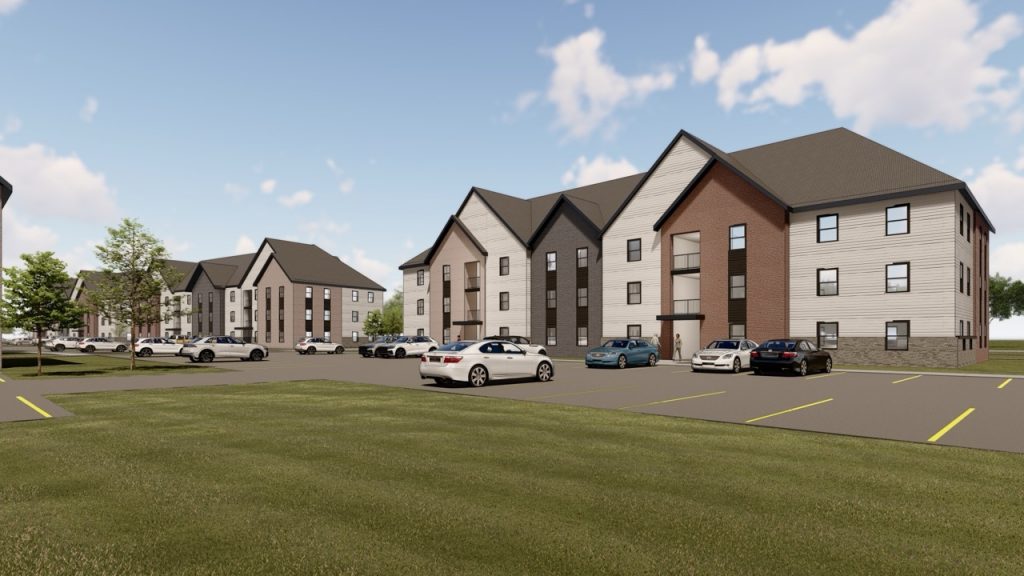
That is why one of the most important things SENT is working on right now is a 176-unit apartment community that will break ground in June. It will be named after the first Black social worker in our school district’s history. We are partnering with our local housing authority, and they have shared that it is the largest project in their history.
Out of those 176 units, 106 will use project-based vouchers. That means a family could have zero income and still have a stable place to live.
That is huge in Hi-Crest because our neighborhood has long been known as one of the most transient neighborhoods in the city. Families move often. Kids change schools often. Every move can cost a child months of learning.
So we are not just building apartments. We are helping families land. We are helping children stay in the same school. We are giving parents room to breathe.
What makes the project even more different is that our housing authority told us this is the first time they have seen a project where a partner like SENT will have services right on site. Housing will not be separated from the support families need. Residents will be able to connect to health care, food access, mental health care, case management, job support, benefit navigation, and other help without having to figure it all out alone.
This is our larger vision: SENT is building a community where a person could move from being unsheltered to being a homeowner without their children ever having to change schools.
That is what we mean when we say housing is part of everything.
Housing is also tied to economic development. I have served on city councils and economic development committees, and one thing I have heard over and over is that businesses follow rooftops. Why? Because people like to get their ice cream home before it melts. Businesses want to be near people, stability, and spending power.
Housing is also tied to public safety. Hi-Crest used to be one of the highest-crime neighborhoods in Topeka. But crime is not separate from basic needs. A Clemson University study showed that a 1% increase in food insecurity can be tied to a 15% increase in violent crime.
As we have worked on housing, food access, health care, mental health, case management, and neighborhood presence, we have also seen safety improve. We have seen a 28% drop in overall crime and a 21% drop in violent crime. This year, we even had one 30-day period with only nine crimes across more than 2,030 homes.
SENT did not do that alone. Police, neighbors, schools, churches, city staff, landlords, homeowners, businesses, and partners all play a role. But it does show that when basic needs are met in a connected way, a neighborhood can begin to function differently.
That brings me to the Teacher Retention and Housing Stability Fund.
We work closely with Ross Elementary, Eisenhower Middle School, Highland Park Central Elementary, Highland Park High School, and Avondale Academy. This school year we have invested over $500k in these schools.
In our feeder schools, we were seeing teachers come in through alternative certification paths to fill open roles. We are thankful for anyone willing to teach. But teaching is a craft. Lesson planning is one skill. Classroom management is another. Building trust with students is another.
What we kept seeing was painful. Just as teachers learned the culture, built trust, and got stronger in the classroom, many would leave for an easier setting.
The Learning Policy Institute reviewed 30 studies and found that teachers tend to become more effective as they gain experience. The strongest growth often happens in the early years, but teachers can keep improving for many years. The same review found that as teachers gain experience, students can improve not only in test scores but also in attendance.
That matters for our kids.
When a teacher leaves, the loss is bigger than one classroom. The school loses trust. Students lose a steady adult. Families lose a familiar face.
For us, teacher retention became a housing issue, an education issue, and a neighborhood stability issue.
We also saw something that broke my heart. Our superintendent was spending about 15% of her personal income to rehab houses so teachers would have somewhere to live. People praised her for being generous, and she is. But it also showed how broken the situation was. Our superintendent was using her own money to house the teachers who were supposed to be teaching our children.
So SENT asked, “What is ours to do?”
We raised $60,000 and created the Teacher Retention and Housing Stability Fund. If a teacher serving in one of our focal schools agrees to stay connected to one of those schools for five years, SENT can provide $5,000 in down payment assistance at closing toward one of the homes we develop in the neighborhood.
If they leave early, the support is paid back on a 20% per year forgiveness schedule. If they stay five years, it is fully forgiven. If they leave before that, part of the money comes back to help the next educator.
And in housing, that $5,000 matters. Down payment and closing costs are some of the biggest barriers that keep working families from buying a home. That support can be the difference between being close to homeownership and actually getting to the closing table.
The fund says to teachers, “If you are willing to invest in our children and our neighborhood, we want to invest in you.”
And because of SENT’s holistic model, the fund does not stand alone.
Our pantry serves teachers, paras, and school staff connected to our feeder schools. Our mental health staff go on campus. Our massage therapist goes on campus. Our clinic staff help with physicals and other needs. We try to wrap support around educators so they can focus more of their energy on teaching.
Because if we want teachers to show up well for students, we have to ask who is showing up well for teachers.
That is the heart of the Teacher Retention and Housing Stability Fund.
It is not just down payment help. It is a community saying, “The stability of our schools and the stability of our neighborhoods are tied together.”
And that is our overall housing strategy.
We build and rehab homes because families need places to live. We create paths to homeownership because ownership can build stability and wealth. We work with local contractors because housing can also create jobs and grow small businesses. We build mixed-income communities because we do not want neighborhoods where poverty is packed together or opportunity is kept away.
We connect housing to food, health, education, and jobs because families do not live their lives in separate boxes.
That is why I say housing is not the finish line. Housing is the foundation.
But a foundation still needs a house built on top of it.
At SENT, that house includes health care, food access, mental health care, workforce development, school stability, transportation, financial coaching, case management, substance use disorder help, and trusted relationships.
For other communities, I would not say copy SENT. Your community has its own history, assets, gaps, and leaders.
But I would ask this:
Where is housing instability showing up in your community?
Is it showing up in your schools? Your workforce? Your health system? Your safety data? Your small businesses?
Then ask: who is close to the pain, and who is close to the resources?
Often, those are not the same people. But change starts when they get in the same room.
Maybe your community does not need a Teacher Retention Fund. Maybe you need a housing fund for nurses, childcare workers, first responders, local contractors, or families in a school boundary.
The point is not the name of the tool.
The point is to use housing to strengthen the people and places your community cannot afford to lose.
So I want to leave you with one final picture.
Housing is one of the clearest ways a community says, “We believe there is a future here.”
When we build a home, we are not just changing a lot. We are changing what people believe is possible on that block.
When we help a family buy a home, we are helping them step into stability, dignity, and ownership.
When we help a teacher stay near the students and families they serve, we are strengthening the relationships around children.
Housing is not the finish line.
Housing is the foundation.
And when housing is connected to the full work of community development, it becomes a driver of health, education, safety, economic mobility, and belonging.
That is what SENT is learning in Hi-Crest.
And that is what I hope more communities across Kansas will have the courage to build.
Thank you.
Sources
- Urban Institute, “Aligning Housing and Education: Evidence of Promising Practices and Structural Challenges.”
https://www.urban.org/sites/default/files/publication/102704/aligning-housing-and-education_0.pdf - Learning Policy Institute, “Does Teaching Experience Increase Teacher Effectiveness? A Review of the Research.”
https://learningpolicyinstitute.org/product/does-teaching-experience-increase-teacher-effectiveness-review-research - Clemson University study referenced for the connection between food insecurity and violent crime.
https://open.clemson.edu/cgi/viewcontent.cgi?article=3571&context=all_theses - SENT Inc. internal program data and project information, including Hi-Crest housing history, crime reduction data, school partnership investments, Teacher Retention and Housing Stability Fund structure, and the planned 176-unit apartment community in partnership with the local housing authority.