
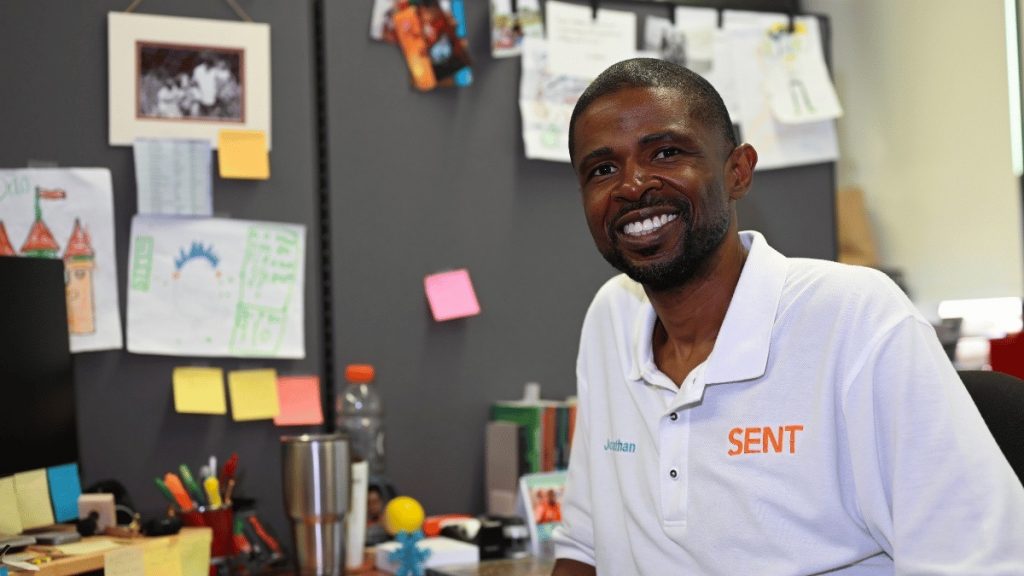
I wear a semicolon on the underside of my wrist.
Not because I am weak.
I wear it because my support system includes access to mental health care. That semicolon reminds me of the people who cared for me and the resources that were within reach in the middle of a quiet but growing mental health crisis.
The alternative to me having a reminder on my wrist is that my family would have been left with only reminders of me.
I understand there is a belief that leaders shouldn’t be in those places. Especially leaders of organizations that provide mental health services. But there I was. And today, that is not a point of shame for me. It is a source of purpose.
I do not want anyone to sit quietly and wonder how they could end it all while their children play in the basement. I do not want anyone calculating what method might cause the least amount of pain. The truth I know now, even more clearly than I did then, is that there would have been no nice, neat way to cover the hole my absence would have left in the lives of the people who love me.
So I am glad my wife intervened. I am thankful for my therapist. I am thankful for a workplace and a community that promotes social-emotional health. I am thankful that care was close enough, accessible enough, and trusted enough for me to receive it.
That is why mental health access is not just a professional issue for me. It is personal.
September is National Suicide Prevention Awareness Month, and I felt it was time to share my truth, which I hope will inspire others to reach out for help.
Mental health does not begin in adulthood. It does not end in old age. Children need care. Teenagers need care. Parents need care. Seniors need care. People carrying grief, trauma, anxiety, depression, stress, addiction, family pressure, financial strain, housing instability, and loneliness need care.
And that is why I pay attention when Kansas makes progress on mental health. Because for me, this is not just a ranking. It is the difference between sitting alone in silence and having someone close enough to help you take the next step.
According to Mental Health America’s most recent state rankings, Kansas has moved from 51st in the nation to 18th in mental health. That kind of movement matters. It shows that progress is possible when people across the state decide mental health care cannot remain optional, distant, unaffordable, stigmatized, or disconnected from everyday life.
That progress does not belong to one organization. It belongs to many: state leaders, public agencies, community mental health centers, Certified Community Behavioral Health Clinics, schools, health care providers, funders, nonprofits, churches, therapists, social workers, peer support specialists, family members, and neighbors who keep showing up.
At SENT, we are grateful to be one part of that larger movement.
Our role is not to claim that SENT moved Kansas from #51 to #18. Our role is to help make that statewide progress real at the neighborhood level. Rankings change when systems change. Lives change when those systems become close enough, trusted enough, and accessible enough for real people to use them before the crisis becomes too heavy to carry.
In 2025, SENT’s Behavioral Health Department served 93 mental health clients, received 357 treatment inquiries, and ended the year with no mental health services waitlist. SENT also provided about $30,000 in free or reduced-fee mental health services, helping neighbors receive care when cost could have kept them from getting help.
The reach of this work extends beyond one neighborhood. Since 2020, SENT has served 442 mental health clients through individual therapy, couples counseling, family counseling, and group counseling. SENT’s Mental Health and Recovery services have reached clients from 34 cities and towns, 56 ZIP codes, and 13 Kansas counties.
Topeka remains the primary service area, and 81 Topeka clients came from the 66605 ZIP code. That means the work is reaching Hi-Crest while also drawing people from across the region. Some clients have traveled more than 60 miles for services. That tells us something important: people will go the distance for care when it feels safe, trusted, and worth reaching. But they should not always have to travel that far.
Access changes outcomes.
In 2025, SENT improved its intake process, added staff capacity, and strengthened follow-up. From July through December, for every two behavioral health inquiries, one person was scheduled within a week of initial contact.
That matters because when someone finally reaches out for help, the next step needs to be timely, clear, and human.
The early outcome data also point in a hopeful direction. After nine months of care, clients appear to show lower levels of anxiety and depression. After six months of care, clients also appear to have fewer suicidal thoughts, less severe suicidal thoughts, and fewer missed days of work, school, or time with others because of poor mental health.
We want to be careful with that language. These are emerging trends, not a final claim that every person’s story moves in a straight line. Healing is rarely that simple. But the data does suggest something we deeply believe: when people can access steady, trauma-informed care, their lives can begin to stabilize.
SENT’s recovery services tell the same story. In 2025, SENT’s Substance Use Disorder Department served 52 clients, including 30 new clients, and provided 325 appointments. SENT also distributed naloxone kits, fentanyl test strips, and medication disposal bags to help prevent overdose and support safer homes.
These are not just numbers and supplies. They are prevention tools. They are second chances. They are evidence that recovery work must meet people where they are, not where we wish they were.
The clearest measure, though, may be what clients say about the care itself. In satisfaction surveys, clients described SENT as caring, welcoming, flexible, affordable, and nonjudgmental. One client said, “They make me feel heard and not judged.” Another said, “I feel heard by my therapist and the services are affordable.” That is the kind of care people are willing to reach for.
This is why we talk about mental health and recovery together. Depression, anxiety, trauma, suicidal thoughts, substance use, food insecurity, housing instability, and loneliness often do not arrive in separate boxes. People do not live in program categories. They live whole lives.
At SENT, licensed, trauma-informed mental health services are available for children age 4 and older, adolescents, adults, and seniors. We work to make care accessible through insurance, private pay, and income-based options because cost should not be the reason someone goes without help.
But we also know therapy by itself is not always enough.
Mental health is connected to everything else: stable housing, food at home, transportation, school safety, access to medication, trusted relationships, and whether a person has someone walking beside them.
It is also not limited to one season of life. A mental health need may show up at 5 or 85. It may come during childhood, adolescence, parenting, caregiving, aging, grief, recovery, or any chapter in between. It may come once, or it may come and go over time.
That is why SENT’s work is built around a wrap-around model. Wherever a person is in their mental health journey, and whatever other needs are connected to that moment, SENT wants to be able to meet them with care that sees the whole person.
In 2025, SENT’s Neighbor Advocacy Team recorded 937 client contacts and made 1,047 referrals. This is the quiet infrastructure that makes mental health access more realistic.
A person may come in through the Southside Filling Station, a school event, the Southside Wellness Clinic, a counseling referral, a housing need, a substance use concern, or a conversation with a Neighbor Advocate. The goal is not to make them start over every time they need help. The goal is to create a single trusted pathway in which neighbors are seen as whole people.
This matters for children and youth, too. Through Campus Connections, SENT worked with students, families, and school staff through music, art, yoga, self-worth groups, financial literacy, and school-based prevention. In 2025, these efforts reached hundreds of students and adults while creating earlier pathways to care.
That is prevention. That is mental health work before someone is sitting alone in a crisis.
Kansas’s move from #51 to #18 gives us reason to hope. But it also gives us a responsibility.
If Kansas wants to keep moving from progress to lasting transformation, we have to keep building systems where mental health care is not only available in theory, but accessible in real life.
For SENT, that means increasing access to mental health and recovery appointments, expanding SUD treatment capacity, and hiring a Spanish-speaking mental health therapist, and creating the private, appropriate space people need to receive care with dignity.
It means strengthening the support system around therapy. SENT’s 2026 plan includes growing the Neighbor Advocacy and Community Health Worker model so more neighbors can receive help with benefits, food support, referrals, and follow-up. These supports may not look like mental health care at first glance, but they reduce the stress, confusion, and instability that often keep people from healing.
It means deepening Campus Connections so schools become stronger places of prevention, early identification, and trusted connection for students, parents, and staff. It means continuing to connect medical care, maternal health, food access, recovery services, and behavioral health through the Southside Wellness Clinic, Southside Filling Station, Neighbor Advocacy, and SENT’s broader wrap-around model.
It also means paying attention to what is working. SENT’s strategic plan calls for stronger data, regular reflection, and better tools to track care, referrals, outcomes, and partnerships across departments. To help Kansas keep moving forward, we have to keep learning, keep improving, and share what is working with others.
The pathway forward is care close to home, support wrapped around the whole person, and simple, useful data that helps us keep getting better.
It means making sure rural communities, urban neighborhoods, tribal communities, immigrant families, seniors, children, and uninsured or underinsured neighbors are not left out of the progress.
It means treating housing, food access, transportation, medical care, employment, recovery, and mental health as connected parts of the same human story.
And it means removing shame.
I am not ashamed of my semicolon. I am not ashamed that I needed help. I am not ashamed that I had a therapist, a wife, a workplace, and a support system that helped me stay here.
I am grateful.
And gratitude has turned into purpose.
Because someone helped me keep going, I want SENT to be part of helping others keep going, too.
Kansas has made real progress. Now we have to make sure that progress reaches the neighborhoods, homes, schools, and families where people are still carrying silent pain.
The goal is not only to move up in the rankings.
The semicolon means the sentence was not over.
That is what we want every Kansan to know.
Your story is not over. Help is not too far away. And you are not alone.
If you or someone you love is in immediate emotional distress, call or text 988 to reach the 988 Suicide & Crisis Lifeline.
Sources
Mental Health America, State of Mental Health in America 2025
https://mhanational.org/wp-content/uploads/2025/09/State-of-Mental-Health-2025.pdf
Kansas Department for Aging and Disability Services, announcement on Kansas mental health ranking and CCBHC investment
https://www.kdads.ks.gov/Home/Components/News/News/72/316
Kansas Health Institute, “What Happened to Health in Kansas?”
https://www.khi.org/articles/what-happened-to-health-in-kansas-reports/
Kansas Health Institute, “CCBHCs in Kansas”
https://www.khi.org/articles/ccbhcs-in-kansas/
Urban Institute, Early Childhood Mental Health Consultation Helps Kids and Caregivers
https://www.urban.org/urban-wire/early-childhood-mental-health-consultation-helps-kids-and-caregivers
Urban Institute, Community Health Worker National Occupational Framework
https://apprenticeships.urban.org/sites/default/files/files-wysiwyg-2025-01/Community_Health_Worker_National_Occupational_Framework.pdf
Robert Wood Johnson Foundation, Systems for Action / Community-Led Systems Research
https://anr.rwjf.org/viewCfp.do?cfpId=1736&cfpOverviewId=
988 Suicide & Crisis Lifeline
https://988lifeline.org/